Thursday, 15 February 2024

Pakiaka - Rotorua Heritage Online

The Rotorua Library Te Aka Mauri Heritage and Research team has been sharing stories about the rich history of Rotorua and its people on Blogger since October 2014. 

We are excited to announce a new home for our stories. Please follow our journey at Pakiaka.


What is Pakiaka?

Pakiaka is a heritage website that brings Rotorua history to life.

It is a place to capture and share the rich history of Rotorua and its people. It provides easy access to an online store of heritage material, including photos, books, maps and related ephemera.

Explore images, audio and video files, documents and publications from times prior to the signing of the Township Agreement, through the years that followed right up to the modern day.

Discover our people and our place through time at pakiaka.rotorualibrary.govt.nz


The story behind the name

Pakiaka translates as 'roots' - the very genesis of the tree. The branching roots anchor the tree from deep within Papatuanuku, much like heritage ground us in who we are.

As the saying goes, "Ki te kore he pakiaka, ka hinga te rākau - without roots, the tree will fall."

The story behind the colour scheme

The beautiful colours of Pakiaka are taken from the logo of Te Aka Mauri. The red reflects the geothermal activity of Rotorua, while the blue represents the lakes that give life to our region.

We're very proud of the design of Pakiaka as well as the stories that live within.


Thank you for following us on Blogger, we look forward to seeing you at Pakiaka. Enjoy and please share it with your friends!


Friday, 3 November 2023

Auckland to Rotorua by rail

The first express train service between Auckland and Rotorua began on 8 December 1894. The train ran once a week from Rotorua on Mondays at 9am, and on Tuesdays at 8am from Auckland. The trip took approximately 8 hours 40 minutes.

The train was hauled by a J class 2-6-0 engines and L class 2-4-0 tank engines with 44ft wooden roof carriages.

Arrival of First Train to Rotorua - 8.12.1894 - Arawa J-Class Locomotive, photographer unknown, Rotorua Museum Te Whare Taonga o Te Arawa (OP-1090)

Rotorua Railway Station and Staff. Photographer unknown. Rotorua Museum Te Whare Taonga o Te Arawa (OP-834)

The service became a daily service in October 1902. This period also saw the introduction of a Baldwin Q class 4-6-2d and N class 2-5-2s.

In December 1903, new 44 foot dining cars were introduced on the service between Auckland and Putaruru (Mahoney). These were the first dining cars catered by the Railways Department instead of by private contractors. The dining car service was withdrawn in 1917 due to wartime conditions (Churchman & Hurst). 

Q Class loco, built by Baldwin. New Zealand Railway Publicity. Rotorua Museum Te Whare Taonga o Te Arawa (CP-3137)


Around 1910, A class 4-6-2 engines were introduced, which saw more engine power. Four years later the speed limit was raised to 45 mph, which saw the journey take approximately 7 hours. During and after World War I there were cutbacks, and at one point the train combined with the Thames Express at Morrinsville (Mahoney, 1982).

In June 1919, all provincial expresses were cancelled due a coal shortage, but in December the Express was back operating (Churchman & Hurst, 2001). Another significant change in engine power was the introduction of the AB class 4-6-2s in the early 1920s. These engines would cut the journey time down to 6 hours and 40 minutes.

The service was renamed the 'Rotorua Limited' in May 1930. The 1930s saw the introduction of luxurious-steel-panelled cars that were specifically built for the service. An observation car was added at the rear of the train, and the journey time was further reduced to six hours. (Mahoney, 1982).

'The Rotorua Limited' [brochure]. Publicity Branch, New Zealand Railways. Courtesy of Rotorua Museum Te Whare Taonga o Te Arawa

'The Rotorua Limited' [brochure]. Publicity Branch, New Zealand Railways. Courtesy of Rotorua Museum Te Whare Taonga o Te Arawa

The name was soon changed back to Rotorua Express. At the beginning of the Second World War the Ab engines were replace with K class 4-8-4s, which could handle the heavier passenger loads. These were soon replaced with J class 4-8-2s. Coal shortages saw the service be reduced to three times per week in 1944. 

In 1951, further cuts reduced the trains to two per week. By this time there were as many as five or six buses running per day with the trip taking only a little over five hours (Mahoney, 1982). The train couldn't compete with bus services and passenger numbers continued to decline. The Rotorua Express run for the final time on 6 February 1958. It was replaced by a railcar service using 88-seater diesel railcars, which ran every day except Sunday. This service was discontinued on November 11 1968.

It was announced in 1988 that the site of the Travel Centre including the Rotorua Station was to be redeveloped, and the yard was lifted during the following year. A new freight yard was developed near Koutu.

In December 1991, the Geyserland Express, a new railcar service to Rotorua was reinstated. Initially there were two services each way daily, but in April 1995 the afternoon service was reduced to Friday and Sunday only, and in November 1996 the service closed. 


This blog post was written by Graeme.


References


Churchman, G. B. & Hurst, T. (2001). The railways of New Zealand. 2nd ed. Transpress New Zealand.

Mahoney, J. D. (1982). Kings of the iron road: steam passenger trains of New Zealand. Palmerston North: Dunmore Press.


Friday, 1 September 2023

JANET FRASER MEMORIAL GUEST HOUSE

Image of Janet Fraser Guest House 2023. and image of membership badge supplied courtesy of Te Rōpū o Te Ora - Women's Health League 

Kia hiwa rā! Kia hiwa rā!

Be on the alert to prepare for any danger that may threaten the welfare of the people through illness, disease or neglect.

Janet Fraser Memorial Guest House today sits quietly on the west flank of Pukeroa Hill. Cars speed past without a glance at the large brick house, or knowledge of the epic story of its creation.

 In the 1930s health was at low ebb for many Māori whānau, particularly in the outlying districts. There was no welcoming place for families to stay when whanau were in hospital.

But racism colours this story. Whānau were not welcome (or able to afford) to stay at hotels or boarding houses around the town during this era.

So, Nurse Robina Cameron, initiator of the Te Rōpū o te Ora (Women's Health League), and with the backing on Te Arawa leaders, rallied members. They saw that the creation of a guest house was an answer to this pressing issue.
In order to retain autonomy, they decided it was essential to raise the bulk of the funds themselves. 

Image of Robina Thomson Cameron courtesy of Whakatāne Museum and Arts (1892-1971)


What followed were ten years of dedicated fundraising. The Government was approached to subsidise the build, and aid was provided by Ngāti Whakaue, Te Arawa Trust Board and Tūwharetoa Trust Board as well as the generous donation from a land sale from Raharuhi Puriri (OBE) and his wife Ngahuia Puriri that was used for the building[1].  

But it was the years of commitment and hard graft by the members of the Women’s Health League that enabled the majority of the funds to be acquired.


Images of Honors Wall dedication inside the Janet Fraser Guest House supplied by Women's Health League

The fifteen Women’s Health League branches around the Lakes put in sterling efforts: Ōhinemutu, Whakarewarewa, Ngapuna, Hinemoa Point, Mourea, Taheke, Rotoiti, Rotoma, Otara marae, Awahau, Reporoa, and Horohoro I and Horohoro 2 committed themselves to the huge task. In the recollections of the time the stories are the same: hard-working and generous commitment to the building of the guest house.

Image: August 28 1948. Opening of the Janet Fraser Memorial Guesthouse. (From left) Te Puhi-o-Rākairoa Royal, Wena Whata, Tawhito Whata, Mrs Curtis, Ka Heke, Te Mauri Ransfield, (unknown), Mrs Retimana. (Back left) Mrs Kameta. Credit: Women’s Health League

Finally, it was ready to be opened. On 30th August 1948 the Janet Fraser Memorial Guest House was officially opened by Rt Hon Peter Fraser – the house named after and dedicated to his late wife Janet.

Barry Bonnington who was a child at the time remembered the opening day:

“It was a big deal, the haka and the waiata and my mum (Tirita Butt), all the aunties dressed in their finery, fur coats everywhere. For us kids from the Pa, it was exciting to watch and the kai was memorable”.

To see footage from the opening of the Janet Fraser Guest house please search the link: https://www.nzonscreen.com/title/weekly-review-368-1948


H.R Vercoe (left) and Maika at opening of Jaanet Fraser Hostel. 28 August 1948. Credit to Womens Health League, Photographer unknown. Rotorua Museum Te Whare Taonga o Te Arawa (CP-117)

Image courtesy of National Library Crown Studios Wellington 1923 PAColl-6304-51

Born in Glasgow, Janet Fraser met Peter Fraser in 1911 and worked with him to combat the influenza epidemic of 1918. In 1919 they married and he went on to become Prime Minister from 1940 – 1949. Janet advocated strongly for child health and welfare and supported Nurse Cameron in the establishment of the hostel for Māori whanau. She died in 1945.

It took a community to build the Janet Fraser Memorial Guest House; the bricks and mortar are imbued with the hard work of the Women’s Health League.


 Janet Fraser Guest House images. Date unknown. Photographer John Scott. Rotorua Museum Te Whare Taonga o Te Arawa (2019.42.137). Janet Fraser Guest House, interior. Date unknown. Photographer John Scott. Rotorua Museum Te Whare Taonga o Te Arawa (2019.42.137)

 Through the years the management of the house was undertaken by members. Hera Rogers was the first and others included Maxine Rennie (nee Te Kowhai), Pinenga Phillips and her husband Peter Nathan, Helen Cowell (nee Hayward) and Rona Larsen[2].

Today, the house is no longer managed by the Women’s Health League. Nevertheless, the initial intention of this quiet landmark remains steadfast: a place of refuge and service for our community.

Reference

[1] See Morrison, L. (2012). Women’s Health League – Memories 1937-2012, (p.8). Mahi Atu Cultural Trust Inc.

[2]See Morrison, L. (2012). Women’s Health League – Memories 1937 – 2012, (p.9, 18 & 19). Mahi Atu Cultural Trust Inc. Rotorua.


Monday, 8 May 2023

Nga Purakau o Te Arawa

Stories of  Te Arawa 

In Aotearoa, ngā pūrākau (creation narratives) are an ancient form of transmitting and creating shared meaning through storytelling.

These creation stories provide a way of looking at our world and environment through a Māori lens. They stand as a model for individual and collective identity, behaviour and aspirations.
Te Arawa ancestors have rich pūrākau, which help us understand origins that are embedded with wisdom and universal lessons to navigate through many of life’s transitions. In these pūrākau, heroines and heroes act as exemplars of human potential, insight and understanding.

I share, with permission, three of the purakau of Te Arawa:

Hatupatu and Kurangaituku

I a Hātupatu e mahi manu ana i te ngahere, ka kite ia i tētehi mea tino rerekē. He wahine e tino rite nei ki te manu. He parirau i ōna ringa, he maikuku roa i ōna matimati, kāore hoki ōna ngutu tangata, heoi, he ngutu manu roa kē i whakamahi ai ia hei tao ki te mahi manu.

Hatupatu was spending the day alone in the forest hunting for birds when he came across a very unusual scene. A short distance away, Hatupatu saw a strange woman with wings on her arms and claws where her fingers should be.  Instead of soft lips, the woman had a mouth like a bird’s beak and was busily using it as a spear to catch birds.

To read the full story go to the Great Te Arawa Stories website: www.gtas.nz.


Maggie Papakura on porch of 'Rauru' house. c.1904. Photograph by Arthur James Iles (b.1870, d.1943). Rotorua Museum Te Whare Taonga o Te Arawa (CP-182)


The above photograph is of Nelson's Carved House 'Rauru" at Whakarewarewa before he sold it in 1910. 

A journalist wrote the following about this carved house:

Captain Nelson has been able to construct a carved house which is certain to create a considerable amount of antiquarian interest.

 The journalist continues:

The single door and window with their frames are beautifully carved and unlike the other wood are coloured black. On the heavy sliding door consisting of a single Kauri slab, is depicted the grotesque and fearful image of the witch Kurangaituku... the window upon which appears the figure of her husband. (Auckland Star, 1906.)


'Rauru' can be visited today at the Museum für Völkerkunde Hamburg.

A little more about Hatupatu


Hatupatu's story does not begin and end with his near fatal experience with Kurangaituku, it seems he was also known as a conservationist, he is described here by Don Stafford: 

Hatupatu lived on Mokoia Island with his parents, but he often travelled across to Rotoiti and Maketu. “He always wore a tupare and often if he liked a place, he would pluck a twig from it and plant it there. That’s what he did here at Ngaukawakawa”

Another tale told is of Hatupatu’s attempt to bring snapper and acclimatise some seventy he had netted at Maketu in Lake Rotorua, sadly though only one snapper survived the trip: 

It was immediately released into the water, whereupon (tradition says) it swam out into the lake, circled Mokoia Island once and returned to the point of its release, beached itself then died’ (Stafford 1999, p.42)


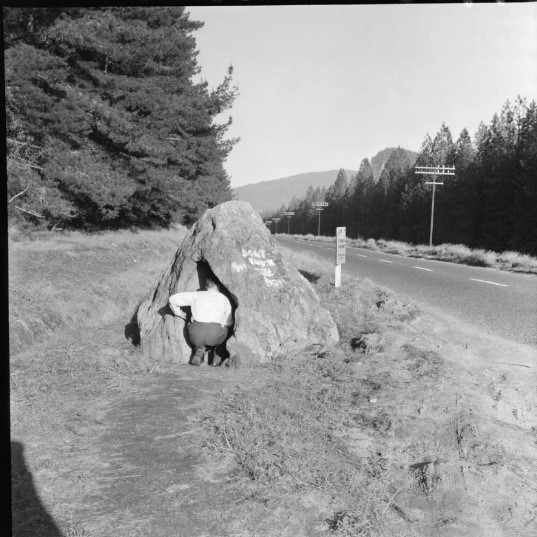
Hatupatu's historic landmark rock on the Taupo Putaruru Highway. Evening post (Newspaper. 1865-2002): Photographic negatives and prints of the Evening Post newspaper. Ref: EP/1958/1863-F. Alexander Turnbull Library, Wellington, New Zealand. /records/23247524

The travels of Kahumatamoemoe and Ihenga

Ko Kahumatamomoe te tama a te rangatira o te waka o Te Arawa, a Tamatekapua.  I ū rāua tahi ko tāna irāmutu, ko Īhenga mā runga i te waka rā ki uta i Maketū.
Nōna e takahi ana i te nuku o te whenua ki tuawhenua, nā Īhenga ngā moana o Te Rotoiti-i-kitea-ai-e-Īhenga me Te Rotorua-nui-a-Kahumatamomoe i tapa i mua i tana wehenga ki te kite i ōna tuākana, i a Taramainuku rātau ko Warenga ko Huarere i noho ai i Te Tai Tokerau.
 
Kahumatamomoe was the son of Tamatekapua, captain of the Arawa waka. He arrived on the waka at Maketū, with his nephew Īhenga.
 
On his journey inland, Kahumatamomoe named Te Rotoiti-i-kitea-ai-e-Īhenga (Lake Rotoiti) and Te Rotorua-nui-a-Kahumatamomoe (Lake Rotorua) before heading off to visit Īhenga’s older brothers, Taramainuku, Warenga and Huarere, who lived in the far north.

To read the full story go to the Great Te Arawa Stories website: www.gtas.nz.


Rāwiri Taonui, 'Ngā waewae tapu – Māori exploration - Te Arawa explorers', Te Ara - the Encyclopedia of New Zealand, http://www.TeAra.govt.nz/en/map/14143/kahumatamomoe-and-ihengas-journeys (accessed 14 March 2023)


Ihenga and the patupaiarehe

I ngā rā o tuawhakarere, ko Te Tūāhu-a-te-Atua i te tihi o Ngongotahā te kāinga o tētehi iwi porehu.  E ai ki te kōrero, he iwi ira atua i mau ai i a rātau te mana atua, ka mutu, i mōhio whānuihia te iwi rā e kīia nei ko te Patupaiarehe.

Long ago the summit of Ngongotahā called Te Tūāhu a te Atua (The Altar of the God) was the home of a mysterious people called the Patupaiarehe. They were thought to be an iwi atua or people of supernatural powers. To some they were known as the ‘fairy people’.

To read the full story go to the Great Te Arawa Stories website: www.gtas.nz.

In the following image of a 1913 survey map the Fairy Spring is clearly marked.


Land  Information New  Zealand (LINZ) and licensed by LINZ for re -use under the  Creative Commons  Attribution 4.0  International licence.


This post was written by Alison


Sources:

Stafford, D. M. (Donald Murray). (1999).  Pakiwaitara: Te Arawa stories of Rotorua. Reed.
Hatupatu and Kurangaituku. (n.d.). Retrieved March 14, 2023, from https://www.gtas.nz
Travels of Kahumatamoemoe and Ihenga (n.d.). Retrieved March 14, 2023 from
https://www.gtas.nz
Ihenga and the patupaiarehe (n.d.). Retrieved 14 March, 2020 from https://www.gtas.nz
New carved house at Whakarewarewa (1906, January 15).  Auckland Star. 
Institute of Cadastral Surveying Inc. (1913) [Survey plan of part of Rotohokahoka D North No.2A Block]. [Map] Retrieved April 19, 2023 from Cadastral Index.


Tuesday, 7 February 2023

A story waiting to be told: Alice Clara Searell

All lives are filled with stories. Rich and relatable, but never exactly the same. For those born at the end of the 19th-century, it was difficult to avoid narratives punctuated by the First World War. The story of Alice Clara Searell, the subject of this blog, was etched deeply with the realities of this brutal conflict. 

Alice was one of a small group of New Zealand women who experienced the war first-hand. Between 1915 and 1919, she served overseas as a nurse with the army. Her heroism was awarded with a Royal Red Cross in 1919. But, her bravery did not stop there. Servicemen returning home to Aotearoa were in desperate need of convalescent care. It seems likely Alice would have heard their call louder than others, having supported them throughout the conflict. Upon her return, she accepted a nursing role here in Rotorua, at King George V Military Hospital.   

New Zealand nurses on board the Rotorua, during World War I. Commons family: Assorted negatives, photographs and postcards relating to the Commons family. Ref: PAColl-0321-001. Alexander Turnbull Library, Wellington, New Zealand.
New Zealand nurses on board the Rotorua, during World War 1. Commons family: assorted negatives, photographs and postcards relating to the Commons family. Ref: PAColl-0321-001. Alexander Turnbull Library, wellington, New Zealand. (https://natlib.govt.nz/records/22881884)  

Nurse Alice Searell in Mrs Walton's home with Mrs Walton's son and two unidentified soldiers. Photograph from page 58 of First World War Photograph Album. Ref: 1992.1156.1. National Army Museum of New Zealand. (https://nam.recollect.co.nz/nodes/view/3887)

Life through a lens 

When Alice passed away in 1972, after an impressive 92 years, her legacy was fragile. She never married or had children. Her stories could have easily been lost to time. Thankfully, glimmers remain in photographs preserved in archives across Aotearoa, including the community archive here at Te Aka Mauri. We are lucky to have been gifted an album depicting her life at King George V Military Hospital. 

Through the camera lens, we see a glimpse of what Alice experienced. The photographs are also a significant record of our history. We encounter the men and children she looked after. The ways in which she and her colleagues passed their time. Smiles, giggles and awkward expressions. And, a landscape that has since changed. 

Images from Ams 178/1: photograph album in Rotorua Library’s community archive:


1

2

3

4

5

6

7

  1. Untitled photograph showing two convalescing servicemen in Ōhinemutu, with the hospital in the background. 
  2. A trip out to The Dragon’s Mouth, Wairakei.Valley.
  3. Photograph titled “Self and Leiut. Comm. Takeska”.  
  4. Japanese marines playing tennis in the hospital grounds.  
  5. Photograph titled “He deserves some too”! 
  6. Nurses after Christmas dinner, 1934. This was the year the hospital was taken over by the Waikato Hospital Board and Alice Searell retired. 
  7. Sister McPatrick with patients. The poliomyelitus epidemic of the 1920s made it necessary for the hospital to specialise in orthopaedic treatment, for which it became a major centre. 

Alice's Timeline

1883: Born in Christchurch, Canterbury, New Zealand. 

1909: Completed the state examination of nurses in medical and surgical work at Timaru Hospital. 

1909-1914: Worked as a staff nurse at Kew Hospital in Southland and then as a district nurse in Invercargill. 

1914-1919: Served overseas with the New Zealand Army (Reg No 22/42 NZANSC). Alice departed Aotearoa for Egypt 8 May 1915 and served in Field Hospital Alexandria. She was one of the first 50 nurses to enlist. For further details of her time nursing overseas, please refer to this page on the National Army Museum’s website. 

1919: Returned to Aotearoa for demobilisation and then worked in a military hospital in Dunedin.  

1919: Awarded Royal Red Cross in recognition of valuable nursing services in connection with the war. 

1920: Started work as a nurse King George V Military Hospital. 

1924: Became matron of King George V Hospital. 

1934: Left her role at the hospital, after it was taken over by the Waikato Hospital Board, to take up a role as matron of the Dental Nurse Hostel in Wellington. 

Late 1930s or early 1940s: Retired to Auckland. 

1975: Died in Auckland at the age of 92. She was cremated at the Purewa Cemetery. 

Returning to Rotorua

In 1961, Alice returned to Rotorua for the first time in 27 years. She was amazed to see two familiar faces: Mr “Bunny” Davis, who had been the office boy in her time, and Mr Russell, the hospital dispenser. The article explains that, since her retirement, Alice had not lived a quiet life: “She is a member of the Returned Sisters Club, holds bridge parties at her home, and is a keen gardener. Her pet hobby is teaching her budgie, “Chatterboy,” to talk.” 


----------------------------------------

References 

Alice Searell returns after 27 years. (1961, November 4). Rotorua Daily Post, p.3 

Invercargill Nurse Decorated for Duty to the Sick. National Army Museum. https://www.armymuseum.co.nz/invercargill-nurse-decorated-for-duty-to-the-sick/  

New Zealand, Electoral Rolls, 1853-1981. Ancestry. https://www.ancestrylibrary.com/search/collections/1836/  

SEARELL Alice Clara - Auckland – Spinster. Archives New Zealand (R13110977). https://ndhadeliver.natlib.govt.nz/delivery/DeliveryManagerServlet?dps_pid=IE40624193  

Wilson, Kathryn Faye, 1945- (1998). Angels in the Devil's pit: nursing in Rotorua, 1840-1940. Karo Press. 

Friday, 7 October 2022

Rotorua Onscreen: Hinemoa and Tūtānekai

Rotorua has the honour of being the location of the first feature film shot in New Zealand.

George Tarr's Hinemoa, which was filmed in eight days in Rotorua, premiered at Auckland's Lyric Theatre on 17 August 1914. (Mita, 1992).

Advertisement for screening of Hinemoa following premiere. Auckland Star (1914, August 14), p. 8. Papers Past.

Tarr had borrowed 50 pounds from Auckland Chamber of Commerce president Edward Anderson and with cameraman Charles Newman had travelled to Rotorua. Tarr had originally intended on producing a film based on Māori life as depicted in the travelling show The Maori. At Home! At Play! At War!, by Reverend Frederick Bennett's Rotorua Māori Mission Choir and Entertainers. But the prospect of war with Germany prevented the expensive project from going ahead. Anderson had offered to fund a similar smaller project. Tarr went to the library. He said 'I read Hinemoa backward and forwards and forwards and backwards and I wrote a scenario'. He meet with Anderson that same day and by the following evening he was in Rotorua (Yarwood, 2021, p. 128).

Hera Tawhai (Sarah Rogers) and her husband Rua played the main roles of Hinemoa and Tūtānekai. They had been playing the roles in a Māori concert in Rotorua. Tarr put the film together with minimal editing. In an interview recorded when he was 81, Tarr said 'I did it as much as possible with the scenes following each other...As a matter of fact, our cuttings were nil, practically' (Martin & Edwards, 1997, p. 23). 

Sadly the nitrate film stock has long since disintegrated and the film is lost. All that remains are a few productions stills, daybills, and radio interviews (Martin & Edwards, 1997).

Hinemoa (Dir. George Tarr, 1914). Hera Tawhai Rogers as Hinemoa. Image reproduced with permission from the family.

In 1962 Rogers did a radio interview in which she recalled her role, costumes and adventures shooting on location. You can listen to this interview here. 

Tarr's was the second film based on the legend of Hinemoa and Tūtānekai. The first was a short film directed by French American-based filmmaker Gaston Méliès, who was the older brother of famous filmmaker Georges Méliès. In 1913 he shot three short films in Rotorua - How Chief Te Ponga Won His Bride, Hinemoa, and Love by a Māori Chieftess, as well as five scenic tourist films. Méliès would be one of the first directors to understand the ease in which Māori actors took to the camera (Harvey, 2005).

Méliès brought 17 members of his filmmaking company from America to New Zealand. He engaged James Cowan as a cultural advisor. He described Cowan as an 'authority on Māori legend and custom' and as a 'general advisor and interpreter' (Fox, Grant, Radner, 2011, p. 18). It is also believed that Reverend Bennett was also involved in Méliès' production as he credits a Pastor Bennett (Martin & Edwards, 1997).

Maata (Martha) Horomona of Ōhinemutu portrayed Hinemoa. In letters to his son Paul, Méliès wrote 'We're in a foul country, cold, rainy, windy...but it's interesting because of the Māoris...very fine people, very intelligent...I only had to explain very slowly to Martha what I wanted and she would immediately do it with a natural grace.' (Dennis, 1992, p. 191).

The negatives of Méliès films were developed in New Zealand and then sent to New York. Similar to Tarr none of Méliès New Zealand short films are known to have survived (Callanan, 2011).

Gaston Méliès at Whakarewarewa, 1912. Image reproduced with permission of Tūhourangi Tribal Authority 

A third adaption of the Hinemoa and Tūtānekai legend, The Romance of Hine-Moa was directed by Danish director Gustav Pauli for British film production company Sphere Films and released in 1927 (Bythe, 1994). 

Maata Hurihanganui (Martha Wickliffe) was cast Hinemoa. Minister of Native Affairs Sir James Carroll’s son Wiki was cast as Tūtānekai. Wickliffe told the Daily Post aged 75 that 'I just couldn’t act with him.' So Martha’s cousin Matt Hona (Akuhato) was cast.

Only the first reel now survives. It was found in 1981 by London barrister Mr J Samuels who lived in a house once owned by Pauli and loaned to the New Zealand High Commission and later transferred to the New Zealand Film Archive.

Wickliffe said in an interview in 1981 that she was paid a pound a day. 'A lot of money in those days. I thought it a great honour to play Hinemoa. The film was very well received overseas. It blended a love story into the scenic beauty of New Zealand. Many overseas viewers found it a wonderful experience to see another country' ("Star of Hinemoa", 1981, p. 1)
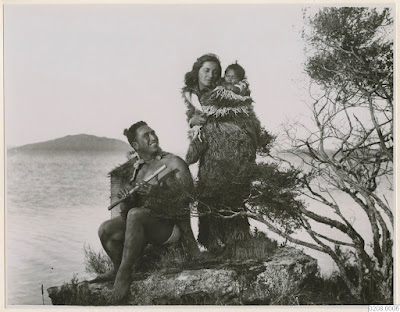
Maata Hurihanganui (Martha Wickliffe) as Hinemoa and Akuhato (Mat Hona) as Tūtānekai. The Romance of Hine-Moa (1927, Dir. Gustav Pauli). Museum of Ethnography of Sweden, Attribution-NonCommercial-NoDerivs 2.5 Generic (CC BY-NC-ND 2.5)


Rotorua was an early popular film location largely due to its scenery, but also because the Te Arawa people were active in the tourism industry as guides and performers, and these skills adapted well to film acting.

Other notable films shot in Rotorua include:

  • A Māori Maid's Love (1916, Dir. Raymond Langford)
  • The Mutiny of the Bounty (1916, Dir. Raymond Langford)
  • The Birth of New Zealand (1922, Dir. Harrington Reynolds)
  • The Adventures of Algy (1925, Dir. Beaumont Smith)
  • Rewi's Last Stand (1925, Dir. Rudall Hayward)
  • Under the Southern Cross, also known as The Devil's Pit or Taranga (1929, Dir. Lew Collins)

This blog post was written by Graeme.


References:

Blythe, M. (1994). Naming the other: images of Maori in New Zealand film and television. The Scarecrow Press.

Callanan, V. (2011). Gaston Méliès. In D. Pivac, F. Stark, & L. McDonald) New Zealand Film: an illustrated history (pp. 45). Te Papa Press.

Dennis, J. (1992). A time line. In J. Dennis & J. Bieringa (Eds.), Film in Aotearoa New Zealand (pp. 183-219). Victoria University Press.

Fox, A., Grant, B. K., & Radner, H. (2011). Introduction: the historical film in New Zealand cinema. In F. Fox, B. K. Grant, H. Radner (Eds.), New Zealand cinema: interpreting the past. Intellect.

Harvey, B, (2005). White cloud, silver screen. Exisle Pub.

Martin, H. & Edwards, S. (1997). New Zealand Film, 1912-1916. Oxford University Press.

Mita, M. (1992). The soul of the image. In J. Dennis & J. Bieringa (Eds.), Film in Aotearoa New Zealand (pp. 37-54). Victoria University Press.

Star of Hinemoa film still has charm, beauty. (1981, October 1). The Daily Post, 1.

Yarwood, V. (2021, July-August). How to make a film in eight days. New Zealand Geographic, 170, 128.


Tuesday, 21 June 2022

The Call to Navigate the Stars

Me mātau ki te whetū, I mua kōkiri o te haere

Before you set forth on a journey,

Be sure you know the stars 


The study of the cosmos is a pursuit of knowledge that unites all peoples from around the world. This year marks the first year that Matariki will be acknowledged as a national holiday in Aotearoa. In recent years Matariki has become a time for all people to celebrate through Māutauranga Māori (Maori Knowledge) but also to celebrate and share their own uniqueness and culture (Matamua,2018). The Te Arawa confederation has been provided by its forbearers a rich navigational history that serves as trace reminders to their ascendants that we carry all we need with in us to answer the call of the stars, step into the fullness of who we are and successfully navigate the path of our own dreams (Ihimaera, 2020).

The migration from Hawaikii to Aotearoa was an incredible act of courage and unrivalled feat of oceanic navigation. Maketū holds special significance for Te Arawa being the landing place of the great Te Arawa waka (Tapsell, 2017). Memorialising this significant history is the Maketū monument. Built at a site remembered as Ōngatoro in 1940; it rises from a stone base with eight sides representing the children of Rangitihi thus the descendants of Te Arawa. Incorporated into its construction are pieces of granite slab from the Coromandel where the commander Tamatekapua is buried. Stones are stacked to form the memorials spire, in memory of the great navigator and high priest explorer Ngā-toro-i-rangi who was the first to step off onto land and conduct rituals beneath the Pōhutakawa tree in full bloom. It is said two stone anchors used to stabilise the great waka were in the Maketū estuary, marking the place where the waka landed.

Fig.1.1/2-032743-F https://teara.govt.nz/en/photograph/5571/maketu-memorial 
National Library of New Zealand

Māori sea fearing culture is deeply embedded in our Polynesian roots. Māori relied on non-instrumental navigation amongst other techniques and technologies that were taught and passed on like Tātai Arorangi (star lore), whakairo (carving) and toi raranga (weaving) (Bader, McCurdy, Chapple,1999). Polynesian navigators relied on the position of the stars to guide them along on their voyaging routes. Navigators knew stars held their positions steady in the sky throughout the year, although at times stars would rise, or set, changing seasonally like that of the Matariki constellation. The star map known as Kāpu whetū was an adaption made by navigator Jack Thatcher for navigators from Aotearoa (Inia, 2018).  

Fig 2.Sited https://teara.govt.nz/mi/diagram/2222/kapehu-whetu

The star map known as Kāpu whetū was an adaption made by navigator jack thatcher adapted from a Polynesian adaption which was originally sourced from the original Micronesian star map designed and used by navigator Mau Piailug

Devastatingly the affects of colonisation infiltrated all aspects of Māori society. The Polynesian achievements and skill required in voyaging the pacific were both denigrated and romantiscised (Walker, 1990). Many cultural practices such as star lore, and the technologies associated with voyaging were either lost and or forgotten almost to the point of distinction (Inia, 2018)


Fig 3. https://nzetc.victoria.ac.nz/tm/scholarly/BesCano-fig-BesCano257a.htm


However due to the steadfast commitment of those cultural practitioners dedicated to the reclamation of mātauranga Māori a revitalization of these aspects of Māori culture has experienced a renaissance. An exemplar of this work is that of master carver Matahi Whakataka-Brightwell of Te Arawa descent and Tahitian master navigator Francis Cowan who joined forces building a double hull waka which was gifted the name Hawaiki Nui I. (Gill, 2011). This prestigious maritime vessel was crafted utilising customary knowledge, tradition and skills. Whole lifetimes of experience and years in the making it was in 1985 that Matahi, Francis and three others set off on this historically momentous journey sailing and retracing the route of Te Arawa-Tainui from Tahiti to Rarotonga then South-west to Aotearoa. Reinvigorating the voyaging techniques of their ancestral navigation predecessors, using the stars, reading all the signs and wonders of their oceanic environment as their guide (Whakataka-Brightwell, 1994).

Fig 4. Ko Matahi Avauli Whakataka-Brightwell me te Waka Hawaiiki-nui, Pahiatua
Photo credited to Stuff Limited


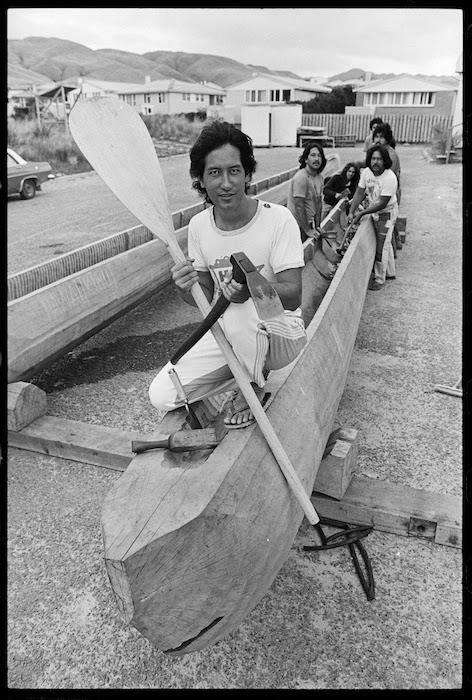
Fig 5. 1/2-032743-F https://teara.govt.nz/en/photograph/5571/maketu-memorial Maori canoe builders at work on Hawaiki-Nui - Photograph taken by Ross Giblin. Dominion Post (Newspaper): Photographic negatives and prints of the Evening Post and Dominion newspapers. Ref: EP/1981/0778/35A-F. Alexander Turnbull Library, Wellington, New Zealand. /records/22840685

Fig 6. Ko Matahi Avauli Whakataka-Brightwell me te Waka Hawaiiki-nui, Pahiatua
Photo credited to Stuff Limited

Ancestral knowledge is encrypted in taonga tuku iho (ancestral expressions of cultural value that are handed down) they are intrinsically imbued with tangible and intangible qualities like (philosophy), tikanga (custom and lore) and karakia. Re-discovering these path ways of knowledge is like accessing a cultural archive (Starzecka, D.C, Neiche, R. Pendergrast, M. 2010)
. With only one example of Māori waka sail in existence, named Te Rā and housed in the British Museum. It is only in recent years that attention has been focused on the weaving technology incorporated into the production of sails for these maritime vessels an essential component to the success of these Pacific voyaging migrations which would not otherwise have been able to happen. Future generations can benefit and become part of the ongoing reclamation of this knowledge (Starzecka, D.C, Neiche, R. Pendergrast, M. 2010).

 
Fig 7. Image sited: https://nzetc.victoria.ac.nz/tm/scholarly/BesCano-fig-BesCano257a.html


Kia Whakatōmuri te Haere Whakamua. 

I walk backwards into the future with my eyes fixed on my past.


This whakataukī or 'proverb' speaks to Māori perspectives of time, where the past, the present and the future are viewed as intertwined, and life as a continuous cosmic process (Walker, 1990).

In 2022 three Te Wānanga o Aotearoa staff have been awarded doctorates in raranga (traditional Māori weaving) through Auckland University of Technology’s Te Ipukarea Research Centre. Their unique joint project - covering raranga past, present and future required each to individually work towards their PhDs through completing research and creating raranga. Each piece of work produced could stand on its own merit but also worked together creating a collective body of work. 

The overarching kaupapa of the joint PhDs project was the role of kairaranga – who were essential in the effective functioning of Māori society - from the past to the future. Amongst many other customary cultural practices our navigational technologies were almost made extinct. However it is worthy to remember within our great migrations from Polynesia also came with us an abundant basket of knowledge that was adapted and evolved to suit the new conditions and resources of this land.

Fig 8. Photos attributed to Te Wananga o Aotearoa - From left to right: Gloria Taituha, Jacqueline McRae-Tarei and Rose Te Ratana at a recent display of their work, Standing under waka sails woven by Jacqueline.Left photo below Rose Te Ratana

 and to the right Gloria Tohutu


Producing a collective time line of work reflecting this understanding and transmission of knowledge Jacqueline McRae-Tarei, a Kaiwhakahaere Ako in Kawerau, looked at historical raranga up to 860 and created sails. Gloria Taituha, a Te Awamutu-based Poururuku, studied the period from 1860 to 1970. Rose Te Ratana, a kaiako from Rotorua, researched raranga from 1970 and into the future and looked more deeply into whāriki. In an interview with the Waikato Herald the ladies commented “Raranga isn't just decorative – it was essential to the successful migration of Māori to Aotearoa and their life here amid a colder climate. So, we acknowledge our tīpuna kairaranga from the distant past as well as more modern and contemporary practitioners who have carried the practice forward (Herald, 2021)

So thanks to the focus, dedication and commitment of cultural practitioners such as these kairaranga and all those that have gone before them and will come after; their research creates an important body of work about the practice of raranga across time and its path into the future. They become part of the continuum of this story carrying their past into their future and in their continued practice and transmission of the practice of raranga they strengthen the connection to the ancestors who are ever present existing both in the physical and spiritual aspects of their work and ensuring its legacy for generations to come.


-------------------------

Bibliography
Walker, R. (1990). Ka Whawhai Tonu Matou: Struggle without end. Penguin.
Matamua, R. (2018). Matariki the star of the year. Huia.
Ihimaera, W. (2020). Navigating the Stars: Māori creation myths. Penguin.
Whakataka-Brightwell, G (1994). Waka. Learning Media Ltd.
Inia, R. (2018). E Oho. Te Mau Aroha.
Bader, H-D., McCurdy, P., & Chapple, J., (1999). Proceedings of the waka symposium 1996: Voyages from the past to the future. Te Huiteananui-A-Tangaroa, New Zealand Maritime Museum
Gill, M. (2011). New Zealand Hall of Fame:50 Remarkable Kiwis. New Holland
Starzecka, D.C, Neiche, R. Pendergrast, M. (2010). Te Papa Press


Paul Tapsell, 'Te Atrawa - Serttlement and Migration', Te Ara - The Encyclopedia of New Zealand, http://www.Te Ara.govt.nz/en/photograph/1515/te-arawa-monument-maketu(accessed 20 June 2017)
Maketu Te Arawas first settlement, https://www.gtas.nz/maketu
https://www.nzherald.co.nz/waikato-news/news/unique-triple-achievement-as-wahine-awarded-doctorates-in-traditional-maori-weaving/U6KGLIREA643IBGIBZLJABD3IY/

Fig.1.1/2-032743-F https://teara.govt.nz/en/photograph/5571/maketu-memorial National Library of New Zealand
Fig 2.Image attributed to https://teara.govt.nz/mi/diagram/2222/kapehu-whetu
Fig 3. https://nzetc.victoria.ac.nz/tm/scholarly/BesCano-fig-BesCano257a.htm
Fig 4. Ko Matahi Avauli Whakataka-Brightwell me te Waka Hawaiiki-nui, Pahiatua. Photo credited to Stuff Limited
Fig 5. 1/2-032743-F https://teara.govt.nz/en/photograph/5571/maketu-memorial Māori canoe builders at work on Hawaiki-Nui Photograph taken by Ross Giblin. Dominion Post (Newspaper): Photographic negatives and prints of the Evening Post and Dominion newspapers. Ref: EP/1981/0778/35A-F. Alexander Turnbull Library, Wellington, New Zealand. /records/22840685
Fig 6. Ko Matahi Avauli Whakataka-Brightwell me te Waka Hawaiiki-nui, Pahiatua. Photo credited to Stuff Limited
Fig 7. Image sited: https://nzetc.victoria.ac.nz/tm/scholarly/BesCano-fig-BesCano257a.html
Fig 8. Photos attributed to Te Wananga o Aotearoa